
FERMENTATION BATH
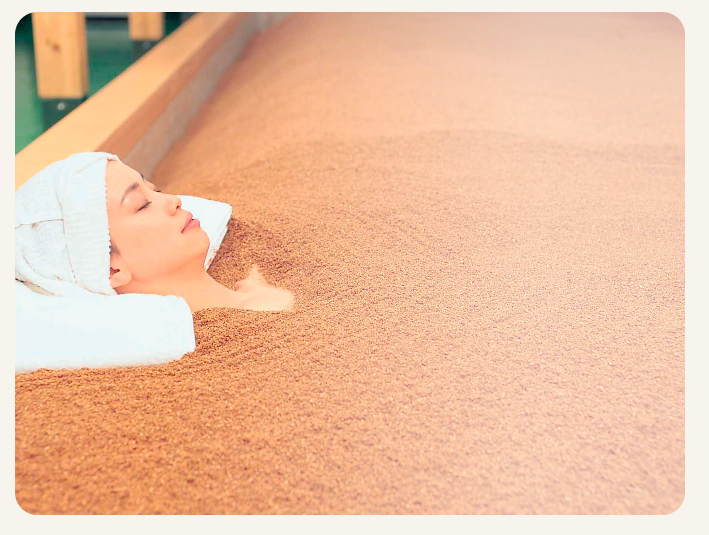
About the Sawdust Bath
A hot bath that uses the fermentation heat produced by microorganisms instead of heating directly with fossil fuels.
WHAT IS IT?
Born from the work of nature,
Soft warmth.
Ohtaka Enzyme stock solution is added to coniferous sawdust and fermented using the action of microorganisms. It is a dry hot bath experience where you will wrap your body in fluffy sawdust and feel the warmth and scent of wood.
HOW IT WORKS
How fermentation creates heat
sawdust
Use sawdust from coniferous trees such as cypress, cedar, and pine.
Ohtaka Enzyme stock solution
Plant extract fermentation liquid is added to create an environment in which microorganisms can work.
fermentation heat
The temperature is raised through fermentation without direct heating using electricity, gas, or oil.
This is an estimate of the amount of sawdust in the bathtub. The temperature that your body feels is different.
There are individual differences in how you feel depending on your physical condition and fermentation status.
Our staff will check the situation and make adjustments.
CARE & ENVIRONMENT
Care, hygiene, and the environment
Daily condition management
Facility staff manage the bathtubs while checking the temperature and fermentation status of the sawdust.
Care for each bath
Cleans areas touched by the user and prepares the sawdust for the next bath.
Recirculates even after use
Once the sawdust has finished its role, it is used as a soil improvement material in fields.